A frozen point-of-sale screen, an employee locked out of email, or a homeowner who cannot connect a new smart device should not automatically require a truck roll. The right remote desktop support software gives a qualified technician a secure way to see the issue, diagnose it, and often fix it while the customer stays at their desk. This remote desktop support software review focuses on what actually matters when uptime, privacy, and responsive service are on the line.
For Las Vegas businesses, property operators, and homeowners with connected systems, the best option is rarely the one with the longest feature list. It is the platform that lets the right person provide help quickly without giving unnecessary access to everyone else.
What Remote Desktop Support Software Should Do
Remote support software allows an authorized technician to view or control a computer, server, or mobile device over an internet connection. At its best, it eliminates wasted time on basic troubleshooting: checking error messages, restarting services, removing malware, adjusting printer settings, reviewing Wi-Fi-related device issues, or installing approved updates.
There are two main support models. Attended support starts when a user requests help and approves a temporary session. This works well for home users and office staff who need a technician to walk them through an issue. Unattended access lets an approved support provider connect to designated devices without someone present, usually through an installed agent and defined permissions. That model is useful for managed business computers, servers, digital signage, or systems that need after-hours maintenance.
Neither model is automatically better. Attended sessions provide a clear, visible handoff for sensitive users. Unattended access can reduce downtime when a critical computer fails before opening hours. A capable support plan often uses both, with controls tailored to the device and the risk.
Remote Desktop Support Software Review: Core Criteria
A product can look impressive in a demo and still create headaches during a real support call. These are the areas that deserve the closest review.
Security and access control
Remote access is powerful, which means it must be tightly controlled. Look for multi-factor authentication, encrypted sessions, device approval, role-based permissions, session logging, and the ability to remove access immediately. For businesses handling customer records, financial information, or medical data, those controls are not optional extras.
The practical question is simple: can you see who connected, when they connected, and what level of access they had? Good platforms record session details and support clear user consent for attended help. They also allow a provider to limit access by technician role, rather than sharing a single master password across a team.
Be cautious with tools that depend on reused credentials, permanent access codes, or unmanaged personal accounts. Convenience has a cost when nobody owns the access list.
Connection reliability and performance
Remote support only saves time if the session is stable enough to work. On a strong office connection, most modern platforms handle routine desktop work well. The difference appears when someone is using a laptop on weak Wi-Fi, working from a home office, or accessing a graphics-heavy application.
A good platform should reconnect gracefully after a brief interruption and adjust image quality to preserve control response. File transfer and multi-monitor support can also make a major difference for technicians working with office users. If a support provider has to ask a user to email screenshots, disconnect a second display, and restart the session repeatedly, the tool is slowing down the fix.
Remote software cannot overcome a failing internet connection or poorly designed Wi-Fi network. In those cases, the support session is still valuable because it helps identify whether the root cause is the computer, router, access point, ISP service, or a specific device. The permanent solution may require on-site network work rather than another remote session.
Ease of use for the person requesting help
The person on the other end may be an office manager with ten urgent tasks, a resident who is not comfortable with technology, or an employee trying to get back into a line-of-business application. They should not need a technical manual to start a session.
The best attended-support experience uses a simple invitation, a clear approval prompt, and plain language that explains what the technician can see or control. The user should be able to end the session at any time. For recurring business support, a lightweight installed agent can reduce setup time while still showing the user when an active session begins.
This is one reason service matters as much as software. A straightforward tool in the hands of a responsive technician is more useful than a premium platform with nobody available to answer the call.
Administration for businesses and properties
Small businesses and commercial properties need more than a one-time support connection. They need visibility into which devices are covered, which machines are missing updates, and which users have administrative rights. The right platform should make it practical to organize computers by location, department, or client site.
For a multi-site operation, centralized management helps avoid the common problem of discovering a critical computer was never enrolled in support. It also supports planned maintenance outside business hours, when updates and troubleshooting are less disruptive.
HOAs and property managers should take a similar approach with authorized administrative devices, office workstations, gate-management computers, and shared systems. Remote access should be documented, limited, and reviewed, especially when staff or vendors change.
Popular Tool Types and Their Trade-Offs
Most remote support solutions fall into a few familiar categories. Dedicated remote-support platforms are designed for technician workflows, with features such as session recording, user management, remote command tools, and device groups. They are often the right fit for businesses that expect ongoing IT support.
General-purpose remote-control tools are usually easy to start with and may be appropriate for occasional personal assistance. Their limitation is governance. A tool built for helping a relative with a laptop may not provide the reporting, permission controls, or centralized management a business needs.
Remote monitoring and management platforms go further by combining remote access with patching, alerting, inventory, and maintenance tasks. These are a strong fit for managed IT environments because they help catch problems before an employee reports them. They also require more careful setup, since the system may have persistent access to many devices.
Built-in operating system options can work for internal technical teams, particularly in standardized environments. However, they may require VPN configuration, identity management, firewall changes, and more hands-on administration. They are not always the easiest route for supporting remote employees, mixed device fleets, or customers outside the organization.
The best choice depends on the environment. A five-person office needs a different setup than a medical facility, a builder managing field laptops, or a homeowner with one computer that needs occasional help.
Questions to Ask Before Choosing a Platform
Before approving any remote access solution, ask whether it supports attended and unattended sessions, whether multi-factor authentication is enforced, and how quickly access can be revoked. Confirm where session logs are stored, who can view them, and whether the platform can support your compliance or recordkeeping needs.
Also ask about everyday operations. Can a technician help a user who has only limited computer skills? Can the support team transfer files securely when necessary? Can the platform connect to systems with multiple monitors? Is there a clear escalation path when the problem cannot be resolved remotely?
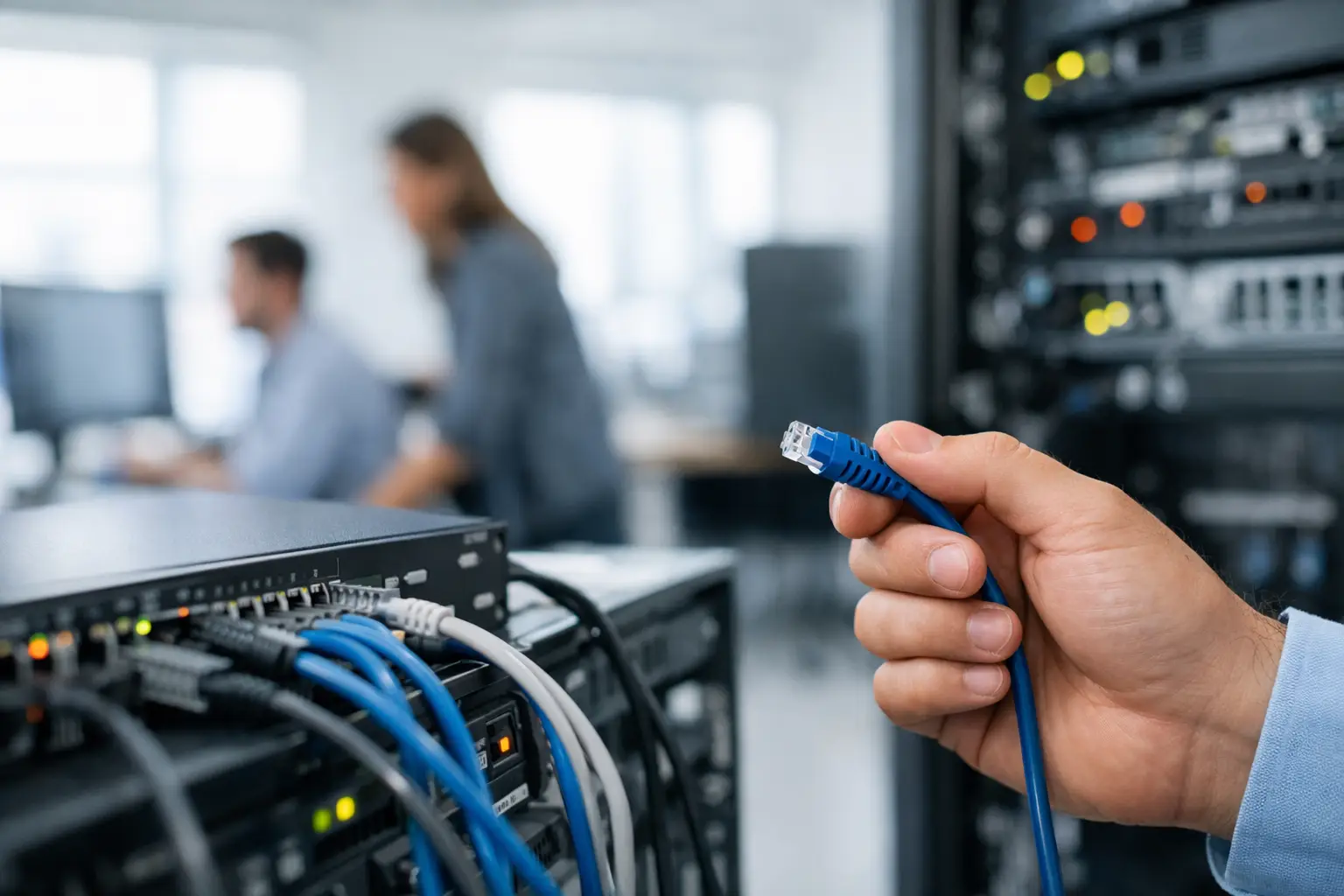
That last question separates a software purchase from a support strategy. Some issues are not software issues at all. A damaged cable, failed switch, overloaded Wi-Fi access point, camera power problem, or faulty workstation needs hands-on diagnosis. Remote tools should make it easier to identify that need quickly, not create the illusion that every technology problem can be solved through a screen.
A Practical Setup That Reduces Risk
For most small businesses, start by identifying the computers and servers that truly need ongoing support. Enroll only approved devices, assign access by role, require multi-factor authentication, and maintain a current offboarding process. Review remote-access users after staffing changes and remove old accounts promptly.
For homeowners, avoid leaving broad remote access active indefinitely just for occasional help. Use attended sessions unless there is a clear reason for a trusted provider to manage a specific device. If remote access is installed for convenience, make sure the account is protected with a unique password and multi-factor authentication.
Las Vegas Tech Pros can help businesses and homeowners match remote support to the rest of their technology environment, including Wi-Fi, workstations, security systems, and network infrastructure. The goal is not to add another app. It is to shorten the time between a problem and a real fix.
When evaluating remote support software, choose the setup that gives you fast help without sacrificing control. A well-managed connection should feel simple when something breaks and nearly invisible when everything is working.