A visitor arrives at a gated home, a medical office, or a busy back entrance. The real question is not simply whether you can see them. It is whether the right person can speak with them, verify their identity, and grant or deny access without creating a new headache for staff or residents. That is where the intercom versus video doorbell decision becomes more meaningful than a basic doorbell upgrade.
A video doorbell is often the right answer for a single front door. An intercom system is usually built for more controlled access, multiple entry points, and properties where someone needs to manage visitors throughout the day. Both can add visibility and convenience, but they solve different operational problems.
Intercom Versus Video Doorbell: The Core Difference
A video doorbell is a door-mounted camera with a button, two-way audio, motion alerts, and an app. When someone approaches or presses the button, the property owner receives a notification and can see and speak with the visitor from a phone, tablet, or indoor display. Many models also record video clips for later review.
An intercom is a communication and access-control system. It may include a door station with video and audio, indoor monitors, mobile app access, gate controls, door strikes, magnetic locks, keypads, card readers, or directory features. The person answering can communicate with the visitor and, when authorized, release a door or open a gate.
The difference comes down to purpose. A video doorbell focuses on visitor awareness at one entrance. An intercom focuses on managed entry. Some modern systems blur the line by offering video, mobile access, and remote unlock features, but the underlying design still matters when choosing equipment and planning installation.
When a Video Doorbell Makes the Most Sense
For many homeowners, a video doorbell is the practical starting point. It lets you check deliveries, speak with contractors, monitor package drop-offs, and see who is at the front door when you are away. It is a straightforward fit for a home with one primary entrance and no need for a connected gate or electronically controlled lock.
Video doorbells can also work well for small offices with a clearly visible front entrance. If staff only need to verify a visitor before walking to the door, a doorbell camera gives them a fast visual check. This is especially useful for businesses that receive occasional deliveries but do not require strict entry procedures.
Installation requirements deserve attention, though. Battery-powered units are flexible, but they need charging and may have reduced performance during heavy activity. Wired units usually provide more consistent power, but they depend on compatible low-voltage wiring. Both also rely on solid Wi-Fi coverage. A camera at the front door is only as useful as the network connection behind it.
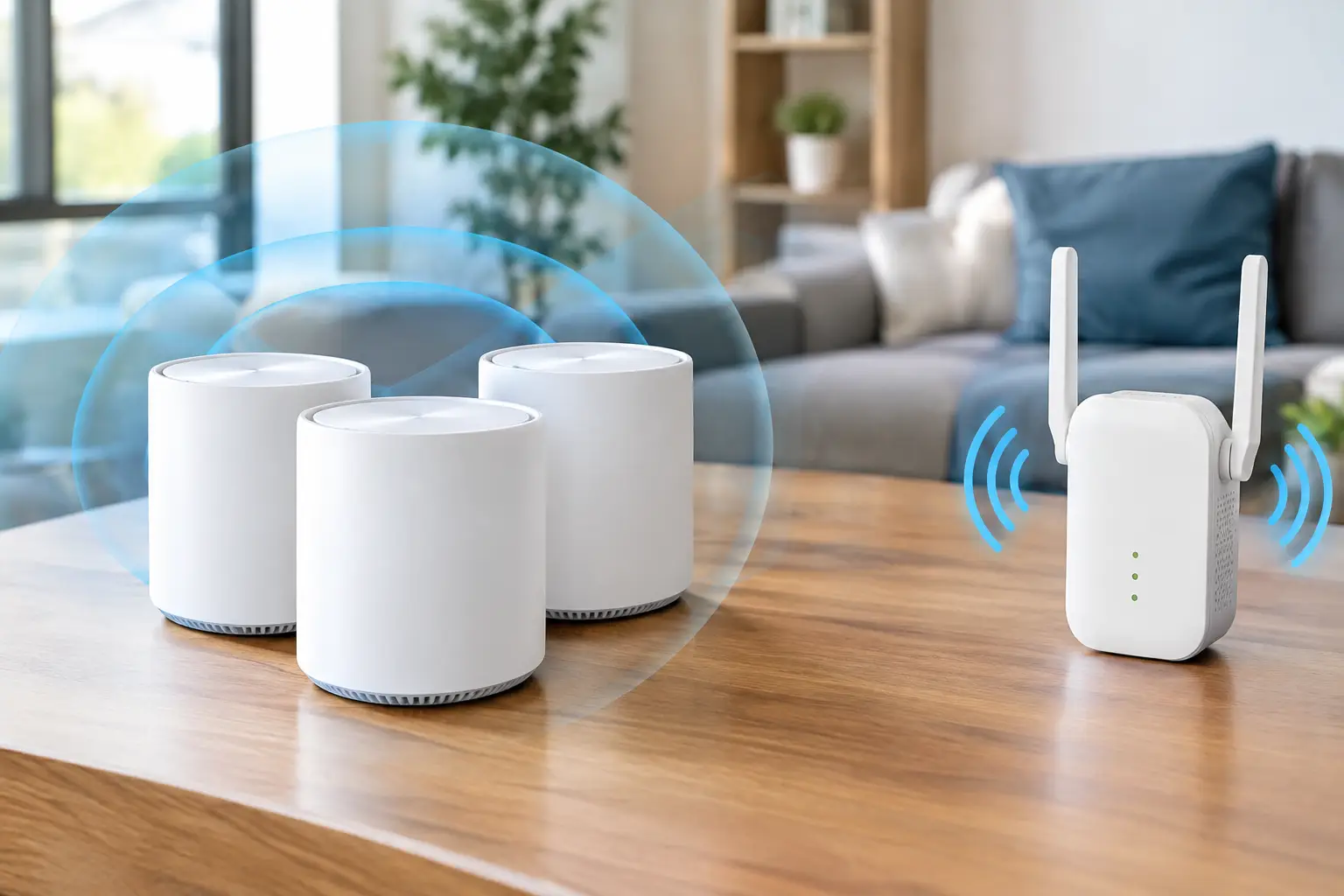
In larger homes or commercial buildings, weak Wi-Fi near an exterior wall, metal gates, stucco construction, and distance from the router can cause delayed alerts, poor video quality, or dropped two-way audio. Solving coverage first is often more valuable than buying a more expensive doorbell camera.
When an Intercom Is the Better Investment
An intercom earns its keep when entry needs to be controlled, not just observed. Consider a gated property where visitors must call from the gate, a professional office that keeps exterior doors locked, or a multifamily property that needs residents to receive guests at separate units. These situations call for a system designed around access decisions.
For a residential estate, an intercom can connect the driveway gate, pedestrian gate, front entry, and interior touchscreens or mobile devices. The homeowner can see who is calling, communicate clearly, and release the gate without walking outside. When designed correctly, it can also work alongside surveillance cameras, gate operators, lighting, and smart-home controls.
For a business, intercom systems create a more accountable front-door process. A receptionist, office manager, or designated employee can answer a visitor call and unlock only the appropriate entry point. In medical offices, professional suites, warehouses, and restricted work areas, this helps reduce casual walk-ins while maintaining a courteous visitor experience.
HOAs and property managers often need even more from an intercom. A single-family video doorbell does not solve visitor management at a community gate or shared building entrance. Intercom platforms can provide resident directories, call routing, visitor PINs, delivery access procedures, and audit trails showing when authorized access was granted. The right feature set depends on the property, but the system should be selected for the number of users and entry points it must support five years from now, not only for today’s immediate need.
Access Control Changes the Conversation
The biggest dividing line between these options is the lock or gate. If you want to remotely release a door strike, trigger a magnetic lock, or activate a gate operator, the installation becomes an access-control project. That means considering power, wiring, fire and life-safety requirements, exit hardware, backup behavior, credential management, and how the system responds if the internet goes down.
A video doorbell with a smart lock can be useful for a home or short-term rental, but it is not automatically a substitute for professionally planned access control. A smart lock may be perfect for a side door used by family members, while a commercial front entrance needs hardware rated for frequent use and an access system that staff can manage reliably.
For commercial properties, avoid treating controlled entry as a collection of separate consumer devices. A door camera, Wi-Fi lock, random keypad, and standalone alarm app can create confusion when employees change, a phone is lost, or something stops communicating. A unified design gives the property owner a clear process for issuing access, reviewing events, and getting support when needed.
Wired, Wireless, and Network Reliability
Wireless products are convenient, but convenience should not be confused with reliability in every setting. A hardwired intercom or video doorbell can provide steady power and avoid frequent battery maintenance. It may also support cleaner communication, longer device life, and more dependable performance at gates or exterior entries far from the main building.
That does not mean every installation must be wired. Existing homes, finished walls, and remote locations can make wireless equipment the sensible option. The right approach is to evaluate the site: available cabling paths, electrical power, Wi-Fi signal strength, construction materials, heat exposure, and the distance between the entrance and the people who need notifications.
Las Vegas heat is another practical factor. Exterior devices sit in intense sun, and gate equipment often faces dust, wind, and high temperatures. Equipment selection, protected placement, weather-rated enclosures, and proper wiring methods all affect long-term performance. A low-cost device in direct afternoon sun may look like a bargain until calls fail, video becomes unreliable, or the unit requires repeated replacement.
Privacy, Video Storage, and Daily Management
Both intercoms and video doorbells can capture visitor activity, but the storage model matters. Some systems store recordings in the cloud under a recurring subscription. Others use local recording or connect to a network video recorder. Neither approach is automatically better.
Cloud storage can make remote viewing and updates simple, while local storage may offer more control and reduce recurring costs. Businesses, medical facilities, and properties with formal security policies should also consider who can view footage, how long recordings are retained, and whether multiple administrators need different permission levels.
Daily management is equally important. A system that sends every alert to one person’s personal phone may be fine for a household. It becomes a weak point for an office, HOA, or retail site. Intercom calls and access alerts should reach the appropriate people, with a backup plan when the primary contact is unavailable.
Choosing the Right System for Your Property
Start with the visitor journey. Where do people arrive? Do they need only to announce themselves, or must someone release a locked door or gate? Who answers during business hours, after hours, and when nobody is on site? Those answers reveal whether a video doorbell is enough or whether an intercom and access-control system is the better fit.
A video doorbell is usually the efficient choice for a single residential front door, basic delivery awareness, and casual remote communication. An intercom is the stronger choice for gates, locked commercial entrances, multiple users, resident directories, and any property where authorized entry must be actively managed.
The best installation is not the one with the longest feature list. It is the one that gives you a clear view of visitors, dependable communication, and an entry process that works every day. Las Vegas Tech Pros can assess the door, gate, wiring, network, cameras, and access needs together so the finished system feels like one solution rather than a stack of disconnected devices.