You walk from the kitchen to the patio and the music follows you without getting louder in one room and disappearing in the next. No carrying a Bluetooth speaker around. No stack of remotes. No guessing which app controls what. That is usually what people mean when they ask, what is whole home audio?
At its core, whole home audio is a system that lets you play music, podcasts, TV audio, or other sound sources throughout multiple rooms from one connected setup. You can play the same thing everywhere, different audio in different rooms, or group spaces together as needed. Done right, it feels simple to use because the hardware, wiring, network, and controls are all working together behind the scenes.
What Is Whole Home Audio?
Whole home audio is a distributed sound system designed to cover more than one room or area of a property. Instead of treating each speaker as its own separate device, the system ties audio zones together so you can manage them from a phone, wall keypad, touch panel, or voice assistant.
A zone is simply an area you want to control independently. Your kitchen might be one zone. The primary bedroom could be another. The backyard speakers may be their own zone as well. In one moment, you can send the same playlist to every zone for a party. An hour later, someone can listen to a podcast in the office while someone else streams music on the patio.
That flexibility is what separates whole home audio from a basic speaker setup. It is less about one loud room and more about consistent, controlled sound across the spaces you actually use.
How a Whole Home Audio System Works
Most systems are built around a few key pieces: audio sources, amplification, speakers, control methods, and a network connection if streaming is involved. The source might be a music service, TV, turntable, media player, or phone. The amplifier powers the speakers. The speakers are installed in-ceiling, in-wall, on shelves, outdoors, or as soundbars depending on the room and the goal.
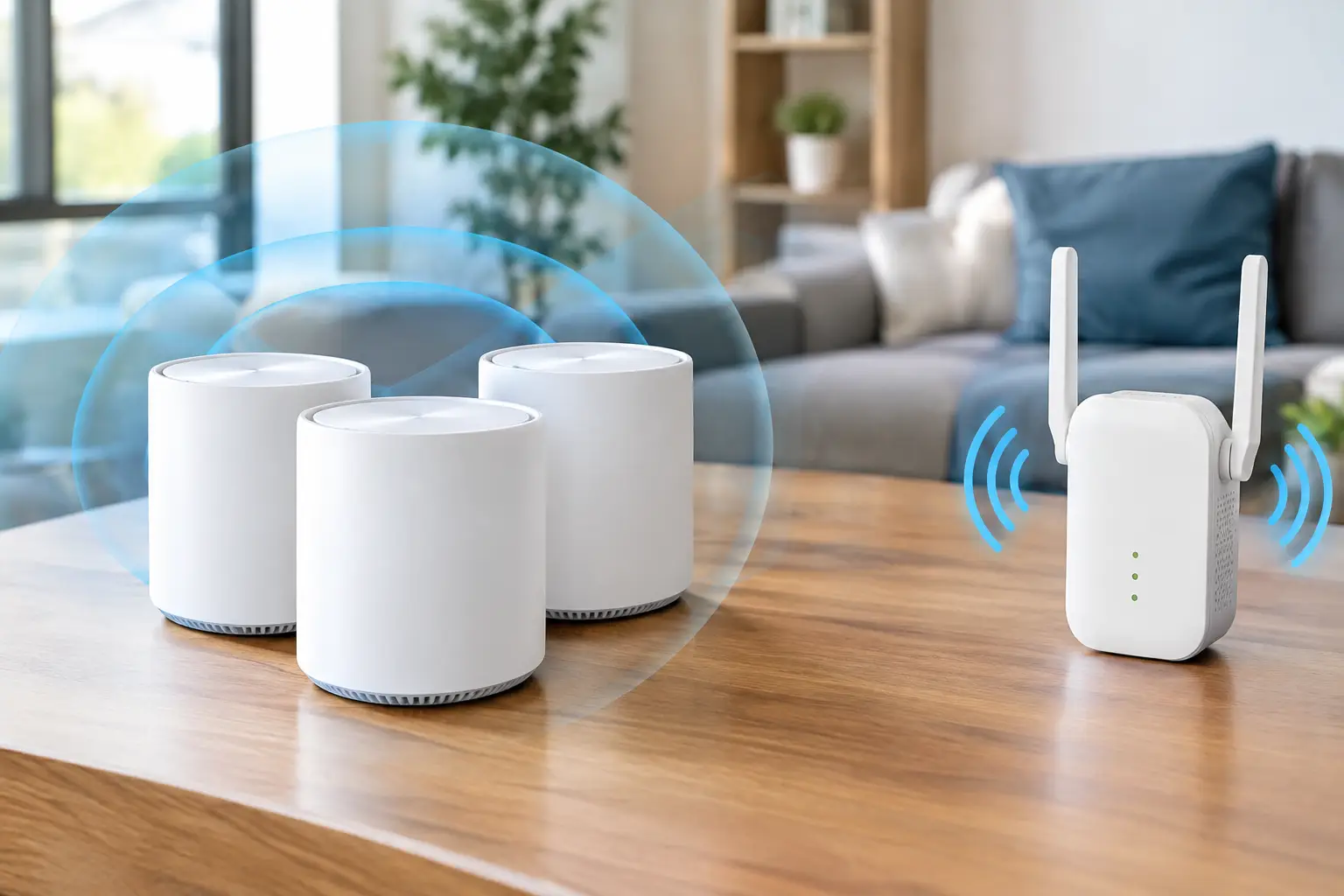
Control is where the user experience can either be great or frustrating. Some systems rely mainly on an app. Others add wall controls or integrate with a larger smart home platform. If the home has weak Wi-Fi, poor network design, or mismatched hardware, the system may technically work but still feel unreliable. That is why whole home audio is not just about speakers. It is also about the network and how everything is configured.
There are two main ways to build it: wired and wireless.
Wired whole home audio
A wired system usually uses speaker wire run from a central location to each room or zone. That central location may contain amplifiers, audio distribution equipment, and networking hardware. Wired systems are common in new construction, remodels, and higher-end projects where clean installation and long-term reliability matter.
The big advantage is stability. Hardwired speakers do not depend on each room having strong wireless coverage. You also get more control over sound quality, speaker placement, and future expansion. The trade-off is installation complexity. Running wire through finished walls and ceilings takes planning, labor, and the right low-voltage experience.
Wireless whole home audio
Wireless systems use network-connected speakers or streamers to distribute sound without running speaker wire to every zone. These setups can be a good fit when you want faster installation, more flexibility, or a system in an existing home with limited access for cabling.
The convenience is real, but wireless is not automatically easier in the long run. Performance still depends on a solid Wi-Fi network, proper placement, and compatible devices. In larger homes, outdoor areas, or properties with coverage issues, wireless audio can expose network problems pretty quickly.
Why People Install Whole Home Audio
For most homeowners, the goal is not technical. It is lifestyle. They want music in the spaces where they spend time, without turning setup into a chore. A good system makes casual listening easier during cooking, cleaning, entertaining, exercising, or relaxing outdoors.
It can also clean up a room visually. In-ceiling and in-wall speakers reduce clutter and free up surfaces. That matters in kitchens, living rooms, covered patios, and open-concept homes where stand-alone speakers may feel out of place.
For some families, the value is control. Parents can limit which rooms are active. Different people can listen to different sources. Volume can be set by zone instead of blasting one area just to hear it from another.
And for properties with outdoor living spaces, whole home audio often becomes part of the way the house is used. In places like Las Vegas and Henderson, where patios, pools, and covered outdoor areas see a lot of use, adding outdoor audio as part of the same system can make the setup much more practical than relying on portable speakers.
Is Whole Home Audio Worth It?
It depends on how you use your home and what frustrates you now.
If you mostly listen in one room and are happy with a single smart speaker, a full system may be more than you need. But if you already bounce between multiple speakers, fight with Bluetooth pairing, or want audio in several rooms and outdoor spaces, whole home audio starts to make more sense.
It is also worth considering when you are already doing other work such as remodeling, building, upgrading Wi-Fi, adding surveillance, or installing smart home controls. Combining projects often saves time and avoids opening walls more than once.
From a resale standpoint, well-designed built-in audio can add appeal, especially in homes where buyers expect modern entertainment and automation features. It should not be viewed as a guaranteed payback item, but it can contribute to the overall impression of a well-equipped property.
Common Setup Options
There is no single best system for every property. The right setup depends on the home layout, finish level, listening habits, and whether you want a simple music system or something that also ties into TVs and automation.
A common starting point is in-ceiling speakers in shared living areas such as the kitchen, family room, primary bath, and patio. These zones are often paired with app control and streaming services. Another approach is to combine built-in speakers in some areas with wireless products in secondary rooms.
Some homeowners want TV audio included in the same experience. That can be done, but it requires more planning. Music distribution and home theater audio are related, but they are not the same thing. A room used for serious movie watching may need different speakers, amplification, and control than a room meant for background music.
Outdoor zones need special attention too. Exterior speakers should be designed for weather exposure, mounted correctly, and aimed for even coverage. The goal is clear sound in the seating area, not blasting the whole backyard or bothering the neighbors.
What to Think About Before You Install
The first question is where you actually want audio, not where it sounds nice in theory. Many people think in terms of every room, then realize they really care about the kitchen, main living area, primary suite, gym, and backyard.
The second question is how you want to control it. If everyone in the house is comfortable with phone apps, that may be enough. If you want guests, kids, or staff to use the system easily, wall keypads or simpler controls may be worth it.
The third question is whether your network can support the system. A lot of audio complaints are really Wi-Fi complaints. Dropped zones, slow app response, and playback issues often trace back to coverage gaps, overloaded equipment, or poor network design.
Budget matters too, but it should be approached realistically. Entry-level wireless audio can be affordable. A professionally installed, multi-zone wired system with clean speaker placement, outdoor coverage, and integrated controls will cost more. The difference is not just hardware. It is planning, labor, tuning, and reliability.
When Professional Installation Makes Sense
There is a reason some audio systems feel effortless and others become permanent troubleshooting projects. Speaker placement affects coverage. Amplifier sizing affects performance. Network setup affects stability. Cabling quality affects longevity. None of those details are obvious once the ceiling is closed up.
Professional installation makes the biggest difference when the project includes multiple zones, outdoor areas, in-ceiling or in-wall speakers, structured wiring, or integration with TVs, lighting, security, or smart home controls. It also helps when you want one team that can handle low-voltage cabling, Wi-Fi, and AV together instead of sending several vendors into the same project.
That is especially useful during remodels and new construction, where timing matters and mistakes behind the walls become expensive later.
What Is Whole Home Audio Really Buying You?
More than anything, whole home audio buys convenience that you actually notice. It removes the small annoyances that pile up with disconnected speakers and patchwork apps. It also gives you a system that fits the way the home is used, whether that means quiet music in the morning, separate zones during the day, or full-property coverage when people come over.
If you are considering it, the smart move is to think beyond the speaker brand and ask how the system will behave day to day. The best setup is not the one with the most features on paper. It is the one that sounds good, works reliably, and feels easy enough that you use it without thinking about it.