A ransomware event rarely starts with a dramatic server failure. More often, it begins with a convincing invoice, a reused password, an unpatched computer, or an employee who clicks once while trying to keep up with a busy day. To prevent business ransomware attacks, Las Vegas organizations need protection that works across people, devices, email, backups, and the network – not one security tool left to do all the work.
For a small business, medical office, property management team, or commercial operation, the damage is not limited to locked files. Ransomware can stop scheduling, payment processing, customer communications, access to records, and daily operations. The most effective response is to reduce the chance of an intrusion while making sure your business can recover quickly if one gets through.
Start With the Systems That Could Stop Your Business
Before buying another security product, identify the systems that create the biggest operational risk. That could include your file server, cloud storage, accounting platform, point-of-sale devices, medical software, shared email accounts, security camera recorders, or remote-access tools.
Ask a practical question: if this system became unavailable this afternoon, what would the team be unable to do tomorrow morning? The answer helps prioritize protection and recovery. A business may be able to work around a locked marketing folder for a day, but it may not be able to operate without client records, payroll, inventory, or scheduling.
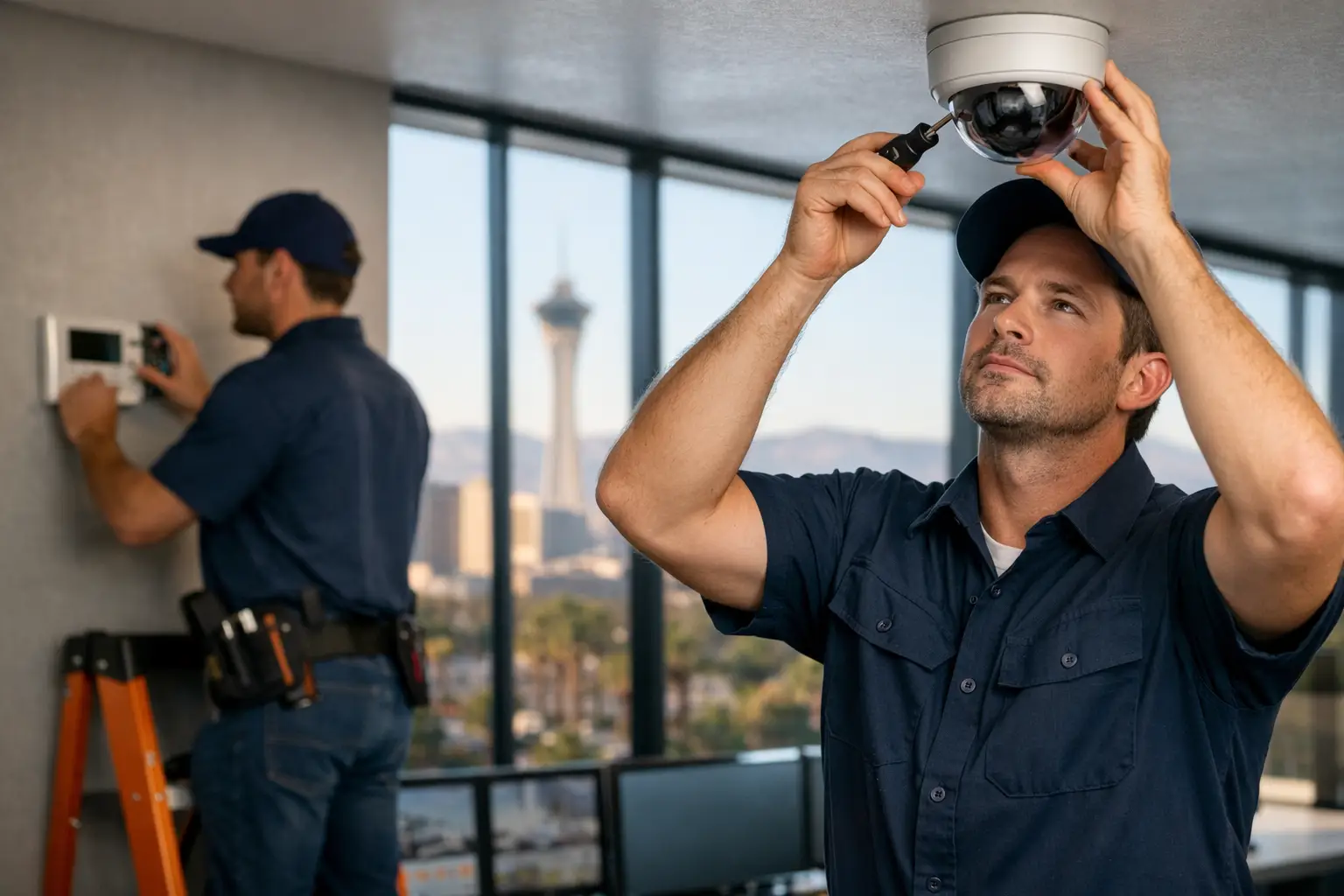
This review should also account for technology that is easy to overlook. An old desktop at the front desk, a former employee’s account, a camera system connected to the office network, and a personal laptop used for remote work can all create an opening. Ransomware operators look for the simplest path in, not necessarily the newest or most visible system.
How to Prevent Business Ransomware Attacks With Better Access Control
Compromised credentials remain one of the most common ways attackers gain a foothold. A password alone is no longer enough protection for email, remote access, financial systems, or cloud applications containing sensitive files.
Require multi-factor authentication for all critical accounts, especially Microsoft 365 or Google Workspace, remote desktop access, VPNs, payroll, banking, and administrator accounts. Multi-factor authentication adds a second verification step that can block many login attempts even when a password has been stolen.
Each employee should have an individual account. Shared logins may feel convenient in a small office, but they eliminate accountability and make it difficult to remove access when roles change. Give users only the access they need to perform their jobs. Front-desk staff do not usually need server administrator rights, and every employee does not need access to payroll or company-wide financial folders.
Administrative accounts deserve extra attention. Use separate accounts for daily work and administrative tasks so a phishing email opened under a standard account does not immediately provide elevated access. Review user accounts regularly, particularly after staff departures, role changes, contractor projects, and vendor transitions.
Treat Email as a Security Entry Point
Phishing messages have become more believable. Attackers can impersonate vendors, executives, delivery services, banks, and internal departments. They often create urgency: a payment is overdue, a document must be reviewed immediately, or a password will expire today.
Email filtering can catch a large percentage of harmful messages, but it cannot catch every one. Employees need clear guidance on what to do when something feels off. They should know to pause before opening unexpected attachments, entering credentials after following an email link, or changing bank details based on an emailed request.
Short, recurring security awareness training is more useful than a once-a-year lecture. Use examples that match real work: fake invoices for a contractor, a bogus document-sharing alert for an office manager, or an email that appears to come from a property owner. Make reporting suspicious messages easy and encourage it without blame. A reported email can protect the entire team.
Patch Devices Before Attackers Find Them
Software updates are not cosmetic housekeeping. Many updates close known security gaps that attackers actively scan for. That includes computers, servers, firewalls, Wi-Fi equipment, network switches, cameras, NAS devices, phone systems, and remote access tools.
A managed patching process should prioritize operating systems, browsers, office applications, security software, and internet-facing equipment. Some updates can be installed automatically; others should be scheduled after testing because they may affect specialized applications or older hardware. The trade-off is real for businesses with legacy software, but delaying updates indefinitely is usually a bigger risk.
Also remove software and equipment that are no longer supported. A device that cannot receive security updates should not remain exposed to the internet or connected to sensitive business systems. If replacement must wait, isolate that device on a separate network and limit who can access it.
Build Backups That Can Actually Restore Your Data
A backup only matters if it is protected from the same event that affects your production systems. Ransomware operators often search for connected backup drives and cloud sync folders, then encrypt or delete them before demanding payment.
Use a layered backup approach. Keep at least one recent copy separate from your primary network or protected from deletion through immutable storage. Maintain copies in different locations so a hardware failure, theft, fire, or local network breach does not eliminate every version at once.
Just as important, test restoration. Select files, folders, and a full system recovery scenario on a regular schedule. Confirm how long restoration takes and whether the recovered data is complete. A backup that looks successful in a dashboard but cannot restore a critical database is not a recovery plan.
Your backup plan should document who can authorize a restoration, where credentials are stored securely, what systems must be restored first, and how staff will work while recovery is underway. Recovery objectives vary. A law office may need document access within hours, while a retail location may need payment systems restored first. Build the plan around business operations rather than generic assumptions.
Segment the Network and Watch for Warning Signs
Network segmentation limits how far an intrusion can spread. Rather than placing every computer, printer, camera, guest device, and smart device on one flat network, separate systems by function. Guest Wi-Fi should not have access to internal computers. Surveillance equipment and building systems should not share unrestricted access with financial records or workstations.
This does not have to mean an overly complicated network. For many small businesses, properly configured business-grade networking equipment, separate Wi-Fi networks, a managed firewall, and clear device policies make a meaningful difference. The right design depends on the size of the site, remote-work needs, compliance requirements, and the technology already in place.
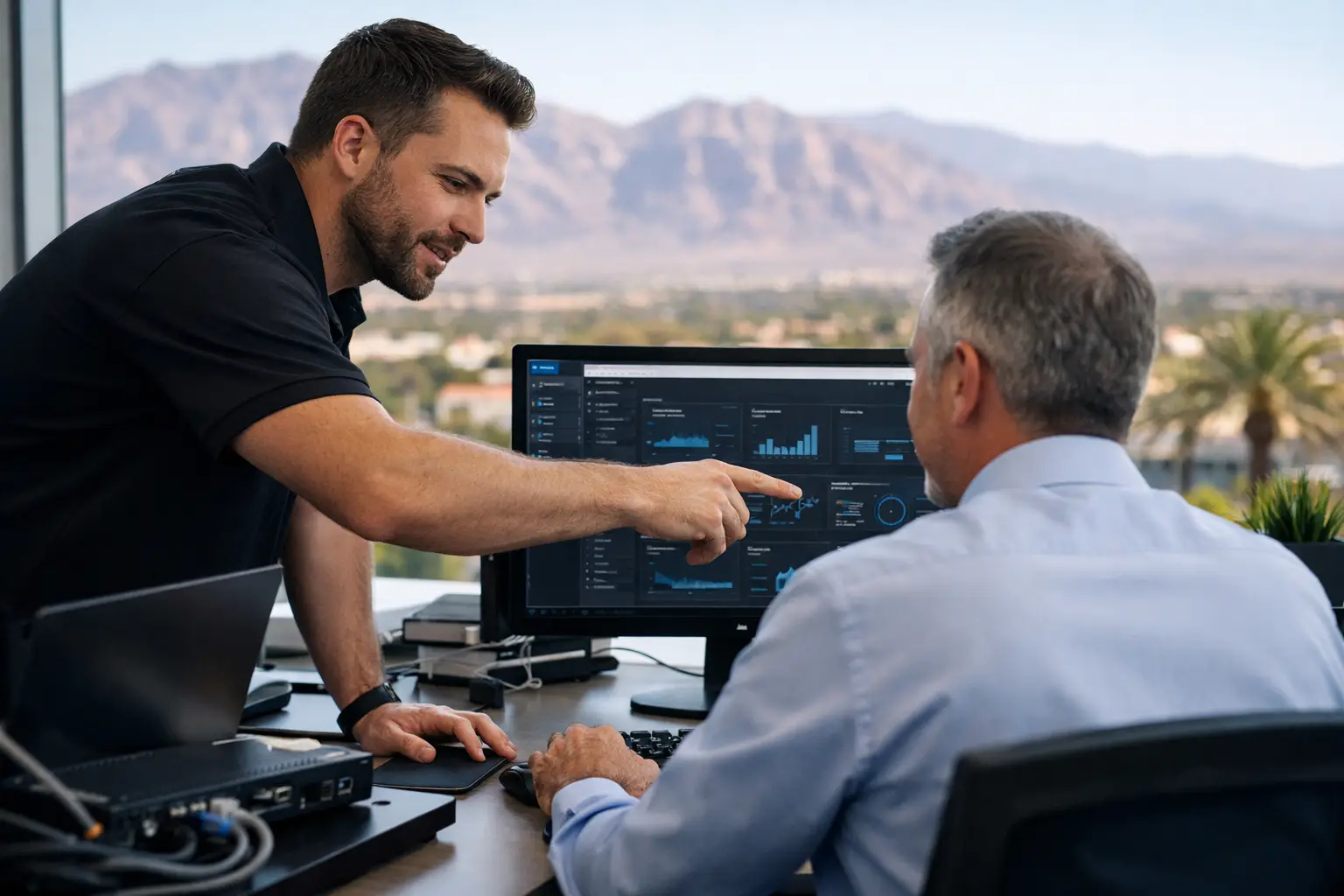
Monitoring also matters because ransomware activity can leave clues before files are encrypted. Unusual sign-in attempts, unexpected administrator accounts, disabled security software, large file changes, or traffic leaving the network at odd hours deserve prompt attention. Attackers may spend days inside a network gathering data and escalating access before launching encryption.
Create an Incident Plan Before You Need One
When a suspected ransomware incident occurs, speed and discipline matter. Employees should know who to contact and what not to do. Disconnecting a potentially infected computer from Wi-Fi or the network can help limit spread, but deleting files or rebooting systems without direction may destroy useful evidence or complicate recovery.
A simple written incident plan should name decision-makers, IT contacts, legal or insurance contacts when applicable, and communication responsibilities. Keep a printed copy or an offline copy available. If email and shared drives are inaccessible, a plan stored only inside those systems will not help.
If ransomware is suspected, isolate affected systems, preserve available logs, reset compromised credentials, and determine what data and services were affected. Do not assume that paying a ransom will restore everything or prevent stolen data from being released. Recovery should be guided by a qualified IT and security response team, along with legal and insurance requirements that apply to your business.
Make Security Part of Ongoing IT Support
Ransomware prevention is not a one-time project. Staff changes, new software, aging computers, office moves, remote work, and new connected devices all change the risk picture. Regular reviews keep small issues from becoming business-stopping problems.
At Las Vegas Tech Pros, the practical goal is straightforward: keep the systems your team depends on secure, supported, and recoverable without turning technology into another full-time job for your office manager. Managed IT support can provide patching, account reviews, network oversight, backup checks, and a responsive technical contact when something does not look right.
The best time to improve ransomware protection is when operations are normal and decisions can be made calmly. Start with your most critical systems, verify that backups restore, close obvious access gaps, and give your staff a clear path for reporting suspicious activity. Those steps create the breathing room a business needs when a real threat appears.