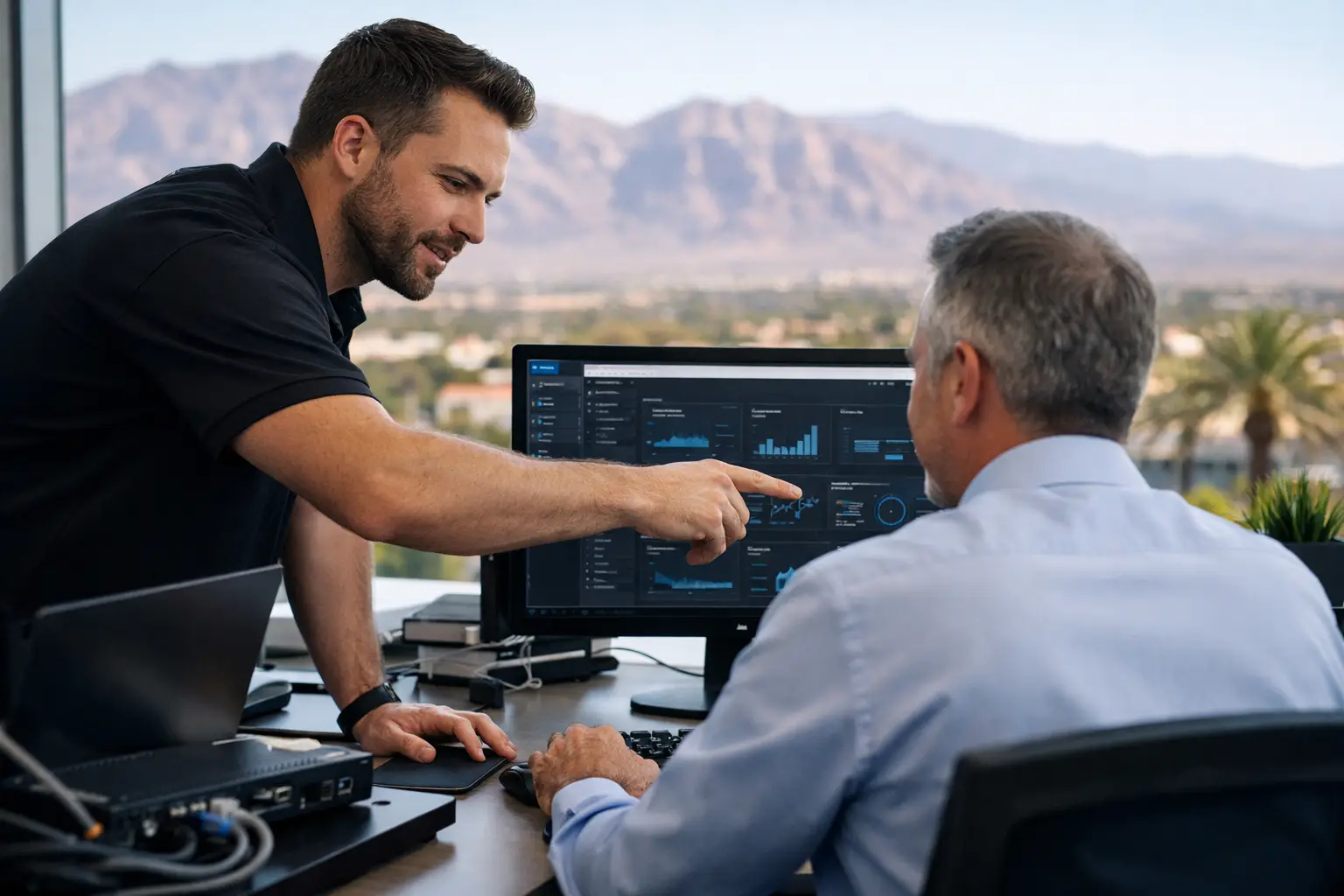
A break-in, disputed delivery, after-hours trespass, or missing inventory creates more than a security problem. It can interrupt operations, put employees in an uncomfortable position, and leave owners trying to piece together what happened. The right business security system installers Las Vegas companies rely on do more than mount cameras. They build a system that gives you clear visibility, reliable access control, and evidence you can actually use.
For local businesses, security installation is not a one-size-fits-all purchase. A small office, medical facility, retail floor, warehouse, restaurant, and multi-tenant commercial property all have different traffic patterns, risk points, network needs, and retention requirements. The goal is a system designed around how your property operates on its busiest and most vulnerable days.
Start With the Risks at Your Property
A camera pointed at the front entrance is useful, but it rarely answers every operational question. Before equipment is selected, an installer should walk the site and identify where people, assets, and vehicles move. That includes customer entrances, employee-only doors, loading areas, cash-handling locations, server rooms, parking lots, side gates, and shared corridors.
This assessment should also account for the details that create trouble after dark. Las Vegas properties deal with intense sun, reflective surfaces, dust, wide temperature swings, and bright exterior lighting. A camera that looks fine in a product photo may produce washed-out faces near a glass entrance or weak footage in a poorly lit lot if it is placed without care.
The best design begins with practical questions: What needs to be monitored? Who needs access? How quickly do you need to review footage after an incident? Are there blind spots between the building and parking area? Are contractors, deliveries, or multiple shifts coming through different entrances? Clear answers lead to a system that supports daily operations instead of adding another complication.
What Business Security System Installers in Las Vegas Should Design
A well-planned commercial system connects several pieces of technology. Cameras are usually the most visible component, but cabling, recording hardware, network capacity, access controls, mobile management, and service response all determine whether the system performs when it matters.
Camera coverage that captures usable details
Coverage is not the same as identification. A wide-angle camera can show activity across a large room, while a dedicated camera at an entry point may be needed to capture a usable image of a face. License plate coverage requires its own planning as well, especially where vehicles are moving or lighting changes quickly.
A professional installer considers camera height, field of view, lighting direction, mounting surfaces, and likely obstructions. High-resolution cameras can improve detail, but resolution alone does not fix poor placement. The right mix may include fixed cameras for key views, varifocal cameras for longer corridors or lots, and panoramic coverage where a broad overview is more useful than close identification.
Smart analytics can also reduce the time spent searching recordings. Features such as person or vehicle detection can help staff find relevant events faster. They should be configured carefully, though. An overly sensitive alert system can create a stream of notifications that employees quickly learn to ignore.
Reliable recording and remote access
Businesses need to know where video is stored, how long it remains available, and who can retrieve it. Local network video recording can provide strong control and dependable performance, while cloud-connected options can simplify remote viewing and off-site redundancy. The right approach depends on the number of cameras, the internet connection, retention expectations, and budget.
Ask for a realistic estimate of recording retention at the selected resolution and frame rate. Thirty days of storage may be appropriate for one operation, while a medical office, property manager, or high-traffic retailer may need longer retention for incident review. It is better to make that decision during design than discover footage has already been overwritten.
Remote access should be convenient without being careless. Authorized managers may need to check cameras from a phone or computer, but permissions should be set by role. A former employee should not retain access, and shared passwords should not be the standard operating procedure.
Access control that replaces loose key management
Physical keys are easy to copy, difficult to track, and rarely returned on time. Access control provides a more manageable alternative for businesses with employee-only spaces, sensitive records, equipment rooms, or multiple tenants. Credentials may include key cards, fobs, mobile access, or other approved methods.
The operational value is significant. A manager can grant access for a new employee, set schedules for certain doors, and remove access when a role changes without rekeying the building. Door events can also help clarify when an entry occurred. For stronger oversight, access control and cameras can be planned together so a door event can be reviewed alongside the relevant video.
Not every door needs the same hardware or level of control. Main entrances, emergency exits, interior offices, gates, and glass storefront doors each require different planning. Fire and life-safety requirements must be respected, which is another reason to work with experienced professionals rather than treating access control as a weekend hardware project.
Do Not Treat the Network as an Afterthought
Every IP camera, recorder, access control panel, and remote viewer relies on the network. If the network is underpowered, poorly organized, or shared carelessly with business-critical systems, security traffic can create frustrating performance issues. Slow camera playback and unreliable remote viewing are often network problems disguised as camera problems.
Hardwired connections are generally the preferred choice for permanent commercial cameras and access devices. They provide stable connectivity and can often deliver power through the same cable using Power over Ethernet. Wireless cameras can have a role in difficult locations or temporary needs, but they are not automatically the best choice for every critical view.
Proper low-voltage cabling also matters for appearance and serviceability. Hidden, labeled runs make a property look professional and make future troubleshooting much faster. Las Vegas Tech Pros can coordinate security, structured cabling, Wi-Fi, and managed IT needs as one connected project, reducing the handoffs that often cause delays and confusion.
Questions to Ask Before Choosing an Installer
Price matters, but the lowest quote may omit the work that makes a system dependable: site assessment, cable pathways, storage planning, network configuration, training, and support after installation. Compare scopes of work, not just camera counts.
Ask whether the installer will document camera locations, label cables, explain recording retention, and train the people who will use the system. Confirm how service requests are handled after the project is complete and whether remote troubleshooting is available. A system that is easy to install but difficult to maintain becomes expensive quickly.
It is also reasonable to ask who is responsible for each part of the project. If a camera does not connect, will the security vendor, IT provider, cabling contractor, and internet company each point elsewhere? A single technology partner can simplify accountability, particularly for businesses that do not have an in-house IT team.
Finally, be clear about compliance and privacy. Camera placement in employee areas, medical environments, customer-facing spaces, and shared properties may have legal or policy implications. An installer can help make technically sound recommendations, while the business should establish its own rules for access, footage review, retention, and employee communication.
Plan for Growth Before You Need It
A security system should not force a full replacement when your business adds a suite, expands a warehouse, opens a second location, or needs a new controlled door. Leave room in recording capacity, network switching, cable pathways, and equipment enclosures where possible.
That does not mean paying for every future feature now. It means choosing an architecture that can grow without creating a patchwork of unrelated apps, unreliable wireless devices, and undocumented wiring. For a growing business, that flexibility can be worth more than an oversized initial installation.
Your security system should make it easier to run the property with confidence. When cameras are positioned for real events, access is controlled by policy, wiring is professionally installed, and support is available when something changes, security becomes a working part of your operation rather than another problem waiting for attention.