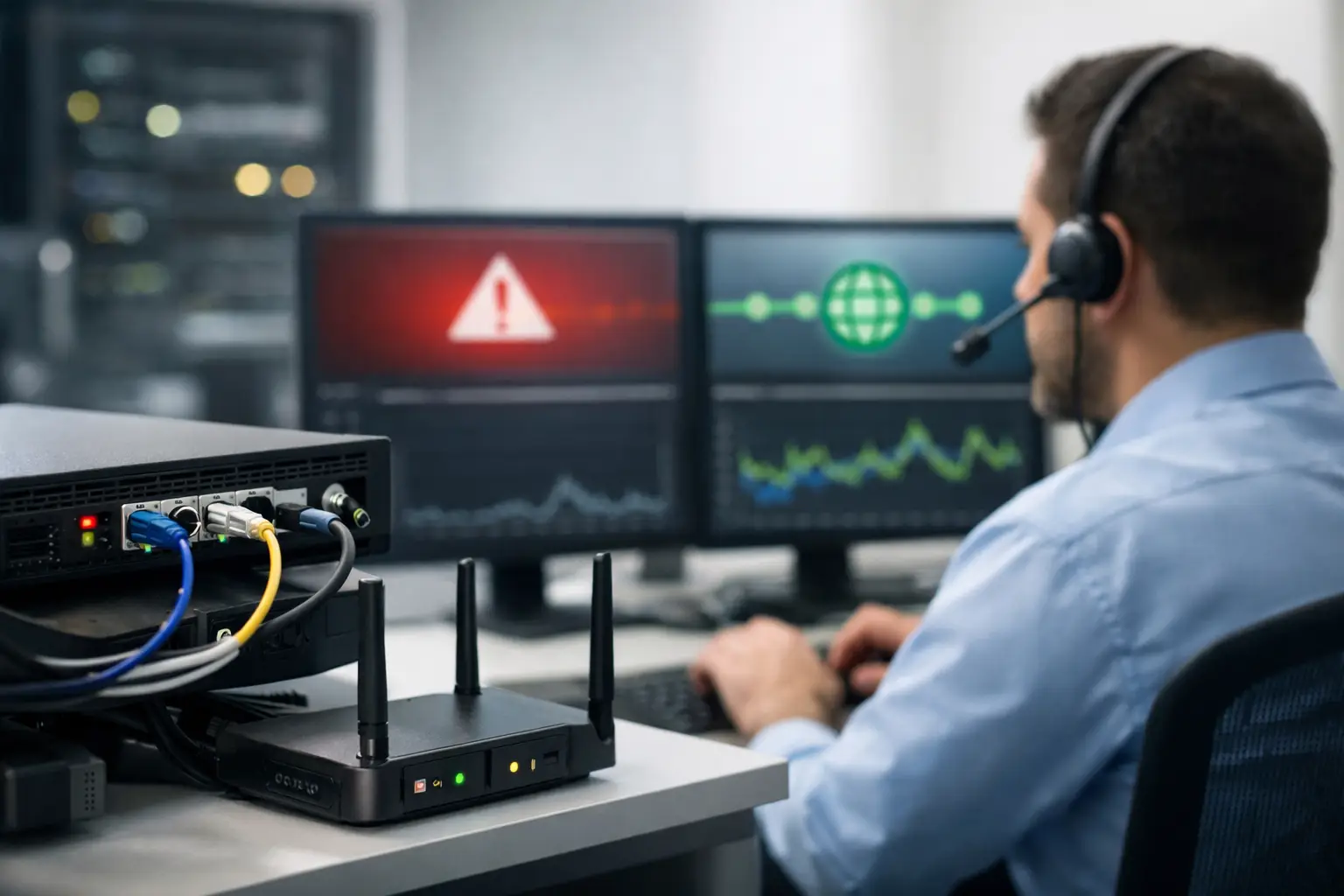
A video call freezes while a payment terminal drops offline. The conference room Wi-Fi works perfectly until the office fills up. Cameras, phones, laptops, printers, and guest devices all compete for the same connection. These are not minor inconveniences. They are signs that business wifi optimization needs more than a new router on a shelf.
For a business, Wi-Fi is part of the operating infrastructure. It supports customer service, cloud applications, security cameras, mobile staff, point-of-sale systems, and the devices employees expect to use without thinking twice. The goal is not simply to see a Wi-Fi network name on a phone. The goal is reliable coverage, enough capacity for real demand, and a network that remains secure and manageable as the business changes.
Why Business WiFi Problems Are Often Misdiagnosed
Many Wi-Fi complaints get blamed on the internet provider. Sometimes that is the issue, especially when the connection is slow even on a wired computer. More often, the internet service is only part of the picture.
A business may have fast service coming into the building but poor wireless performance inside it. Thick walls, metal framing, glass, concrete, equipment rooms, refrigeration units, and neighboring networks can all interfere with a signal. In Las Vegas commercial spaces, large open floors, suites built from mixed materials, and long corridors can create their own coverage challenges.
Device demand matters just as much. A small office with 15 employees may easily have 50 or more connected devices once phones, tablets, printers, cameras, smart TVs, door access hardware, and guest devices are included. A wireless network designed for a handful of laptops can become overloaded without looking obviously outdated.
The first step is to identify whether the problem is coverage, capacity, interference, configuration, or the wired network supporting the access points. Guessing leads to unnecessary equipment purchases and the same frustrating result.
Start With a Site Survey, Not a Router Purchase
Business wifi optimization begins with understanding how the building is actually used. A good assessment considers the floor plan, construction materials, current cabling, internet speed, device count, and applications that cannot afford interruptions.
A medical office may need dependable wireless coverage in exam rooms while keeping patient and administrative systems separated. A retail business may need reliable service at checkout, in inventory areas, and on the sales floor. An office may depend on stable video conferencing in rooms where several people connect at once. Each environment calls for a different design.
Wireless access points should be placed where people and devices need service, not simply where it is easiest to plug them in. An access point hidden in a back closet may technically provide a signal, but it may not deliver the speed or reliability needed in high-use areas. Proper placement, power settings, and channel planning make a measurable difference.
Adding more access points is not always the answer. Too many units placed too close together can create overlapping signals and interference. The right number depends on building layout, wall materials, expected device density, and the type of work taking place in each area.
Build Coverage and Capacity Together
Coverage answers one question: can a device connect from the places people work? Capacity answers another: can the network support every active device without slowing down or dropping connections?
Businesses often solve a dead zone by adding an inexpensive extender. Extenders can be useful in limited situations, but they are rarely the best foundation for a business environment. They may cut available bandwidth, add another point of failure, and make roaming between areas less reliable.
Hardwired access points are typically the stronger option for offices, retail locations, medical facilities, and larger properties. Each access point connects back to the network through structured cabling, allowing it to provide better performance than a device that has to repeat a weak wireless signal. Power over Ethernet can also deliver power and data through the same cable, keeping installations cleaner and easier to support.
For larger spaces, a properly designed system lets staff move from one area to another without losing calls or reconnecting manually. That matters for mobile teams, tablet-based workflows, warehouse scanning, and any business that depends on cloud applications throughout the day.
Separate Business, Guest, and Smart Devices
A single shared Wi-Fi password may feel simple, but it creates unnecessary risk. Staff computers, customer devices, cameras, smart displays, door controllers, and point-of-sale equipment do not all need the same access to the network.
Network segmentation separates those groups so a guest device cannot freely communicate with business systems. It also makes troubleshooting easier. If guest traffic increases during an event or a busy afternoon, it should not interfere with payment processing or staff applications.
At a minimum, most businesses benefit from separate networks for employees, guests, and operational devices. Depending on the environment, security cameras, access control equipment, voice systems, and point-of-sale devices may also need their own protected segments.
Security should include strong unique passwords, current encryption, controlled administrative access, and regular firmware updates. For businesses with compliance obligations or sensitive client data, network design should be reviewed with those requirements in mind. Convenience matters, but it should not come at the expense of protecting systems that keep the business running.
Watch for These Signs Your Wi-Fi Is Underbuilt
Intermittent problems are easy to ignore until they affect revenue, customer confidence, or employee productivity. These common symptoms usually point to a network that needs attention:
- Video meetings lag, freeze, or disconnect when several employees are online.
- Staff lose signal in conference rooms, back offices, stockrooms, or outdoor work areas.
- Payment terminals, printers, cameras, or smart devices randomly go offline.
- Employees rely on personal hotspots because office Wi-Fi is unreliable.
- Guests receive the same network access as staff or business systems.
A speed test from one desk does not tell the full story. Performance needs to be checked in the areas where people work, at busy times, and across the devices that matter most. A network can appear fast in an empty office and struggle once calls, streaming, cloud backups, and guest connections start competing for bandwidth.
Do Not Ignore the Wired Network Behind Wi-Fi
Wireless performance depends on the equipment behind it. An outdated switch, a poorly configured firewall, insufficient cabling, or an overloaded internet connection can hold back even high-quality access points.
This is why a complete evaluation looks at the full path: internet service, firewall, switches, cabling, access points, and connected devices. If an access point is limited by an older network port or a damaged cable, replacing the access point alone will not solve the problem.
Cabling is particularly important when expanding coverage. Running clean, properly terminated low-voltage cable to the right access point locations gives the wireless network a dependable foundation. It also leaves room for future cameras, access control, audiovisual equipment, and additional network devices without relying on temporary fixes.
Make the Network Easier to Support
A business Wi-Fi network should not require a full reset every time a device disconnects. Centralized management makes it easier to monitor access points, apply updates, control guest access, and identify issues before they spread across the office.
This does not mean every small business needs an enterprise-grade setup with features it will never use. The right solution depends on the number of users, property size, security requirements, and how costly downtime is. A small professional office and a multi-suite medical facility have different needs, but both deserve equipment that can be managed properly and expanded when needed.
Documentation also matters. Clear records of network names, device locations, cabling routes, passwords, and configurations can save significant time during an outage or renovation. It is especially valuable when one provider supports IT, surveillance, access control, and audiovisual systems that all touch the network.
Get a Design That Fits the Way You Work
Business wifi optimization is not a one-time speed upgrade. It is a practical design process that matches coverage, capacity, security, and support to the way your business operates every day.
Las Vegas Tech Pros can assess the full environment, from Wi-Fi coverage and structured cabling to connected cameras, access control, and ongoing IT support. The right next step is to evaluate the problem where it happens, then build a network that helps your team work without chasing signal bars, restarting equipment, or waiting for critical systems to reconnect.