A few years ago, most companies hired managed support to keep email working, patch computers, and reset passwords. That is no longer the whole job. The biggest managed services industry trends now sit at the intersection of IT, cybersecurity, physical security, networking, cloud systems, and on-site infrastructure. For business owners and property managers, that shift matters because technology problems rarely stay in one lane.
If your Wi-Fi is unstable, cameras drop offline, access control stops syncing, or a remote employee cannot connect to line-of-business software, you do not care which vendor category caused the issue. You care about response time, clear accountability, and getting back to normal fast. That is exactly why the managed services market is changing.
Why managed services industry trends are expanding beyond IT
The old MSP model was built around desktops, servers, and business networks. That is still part of the picture, but modern environments are more connected than they used to be. Offices depend on cloud apps, guest Wi-Fi, VoIP, surveillance systems, smart displays, conference room AV, and door access tools that all rely on the same network foundation.
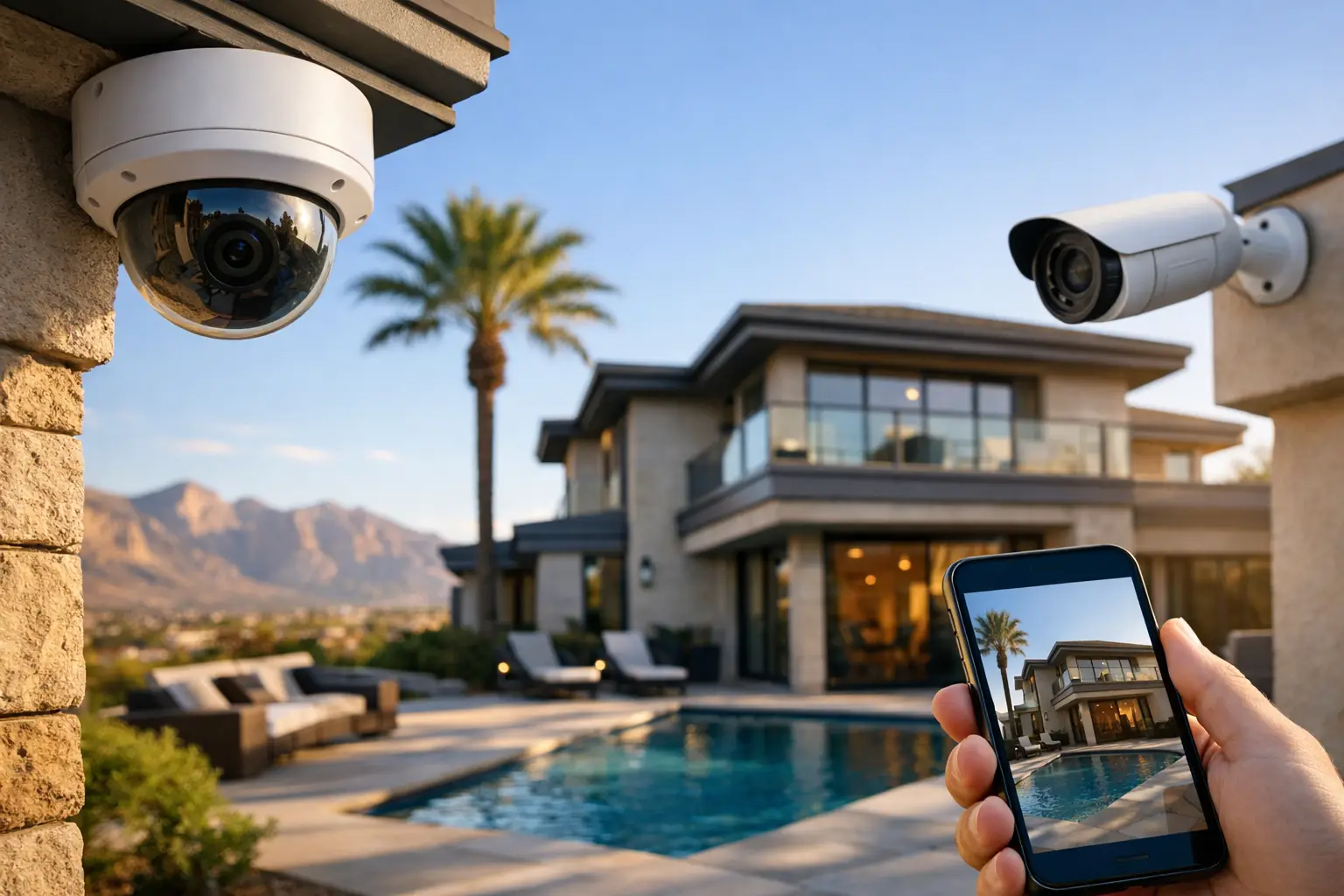
For homeowners, the same pattern shows up in a different form. Security cameras, smart locks, home theaters, whole-home Wi-Fi, and automation platforms all need reliable design, installation, and ongoing support. The line between IT support and property technology is thinner than ever.
That does not mean every provider should claim to do everything. It does mean customers increasingly prefer one accountable partner who can manage overlapping systems instead of pointing fingers across three or four vendors.
1. Cybersecurity is no longer an add-on service
Cybersecurity used to be sold as an extra layer. Now it is the baseline. Managed service providers are expected to handle endpoint protection, patch management, identity controls, backup oversight, and user security policies as part of the core relationship.
This trend is being driven by simple reality. Small and mid-sized organizations are being targeted more often, and many do not have internal security staff. A medical office, HOA, retail business, or professional services firm cannot afford to treat security as a side project.
There is a trade-off here. More protection usually means more structure. Multi-factor authentication, tighter permissions, and device standards can frustrate users at first. But most organizations eventually realize that a little friction is better than a major outage, ransomware event, or data exposure.
2. Co-managed support is growing fast
Not every organization wants to fully outsource technology. Many have an office manager, internal IT lead, or operations person who handles day-to-day issues but needs backup. That is why co-managed service models are gaining ground.
In this setup, the managed provider does not replace internal staff. They strengthen them. That can include remote monitoring, escalation support, after-hours coverage, cybersecurity tools, documentation, and project help for network upgrades or site expansions.
For growing businesses, this model often makes more sense than choosing between two extremes. Hiring a full internal team is expensive. Relying on one overloaded employee is risky. Co-managed support gives companies room to scale without losing control.
3. Physical security and IT are being managed together
One of the most important managed services industry trends is the convergence of network infrastructure and physical security. Cameras, video recorders, intercoms, access control panels, and smart sensors all depend on cabling, switching, internet connectivity, and remote access policies.
That creates a practical problem for customers. When a camera system is slow, is it a hardware issue, a network bottleneck, bad cable, weak power delivery, or a configuration problem? In many cases, the answer spans multiple disciplines.
This is where hands-on providers stand out. A company that understands surveillance, switching, low-voltage cabling, and network design can solve the actual issue faster because it is looking at the full environment. For commercial sites especially, that kind of overlap is becoming normal, not specialized.
4. On-site service still matters, even in a remote-first support world
Remote management has improved a lot, and it should. Monitoring, software deployment, alerting, help desk support, and many routine fixes can be handled quickly without waiting for a truck roll. That keeps costs down and response times up.
But one of the less talked-about trends is that on-site capability has become more valuable, not less. Networks still need to be built. Access points still need placement and tuning. Cameras still need proper mounting angles. Cables still need to be run cleanly and safely. Conference rooms still need real-world testing.
This matters in markets like Las Vegas, where businesses, medical offices, retail locations, and residential properties often need both immediate remote support and experienced field technicians. A provider that can only log in from afar is useful. A provider that can log in and show up is usually more useful.
5. Clients expect strategic guidance, not just ticket resolution
The MSP relationship is shifting from break-fix support to operational planning. Clients want to know what needs attention now, what can wait, and what should be budgeted next quarter instead of next week.
That does not mean every customer needs a formal technology roadmap full of boardroom language. In practice, it often means straightforward guidance. Your firewall is aging out. Your Wi-Fi design no longer matches device density. Your backup process has a gap. Your camera storage is undersized. Your conference room setup is creating support calls every Monday.
Good managed service providers are becoming better at translating technical details into business decisions. The value is not just fixing the issue. It is helping clients avoid the next one.
6. Standardization is replacing patchwork environments
Many companies grew their technology stack one quick fix at a time. One vendor installed cameras. Another handled internet. Someone else mounted displays. A former employee chose the firewall. Wi-Fi was expanded only after dead zones became a daily complaint.
That approach works until it does not. As environments get more connected, inconsistent equipment and undocumented changes create more downtime, more finger-pointing, and slower support.
A major trend in managed services is standardization across hardware, software, security settings, and support processes. This does not mean forcing every client into the same exact setup. It means reducing unnecessary variation so systems are easier to monitor, secure, and support.
There is a balance to strike. Standardization improves reliability, but providers still need flexibility for budget, building layout, compliance requirements, and existing infrastructure. The best approach is not one-size-fits-all. It is controlled, documented, and intentional.
7. Customers are choosing providers who cover more ground
This may be the most practical shift of all. Clients increasingly want fewer vendors involved in connected systems. If one team can handle managed IT, networking, structured cabling, surveillance, AV support, and related troubleshooting, that saves time and reduces confusion.
That does not mean customers are looking for a generalist with shallow knowledge. They still want technical competence. What they want to avoid is the common service loop where the IT company blames the camera installer, the installer blames the network, and the network issue turns out to be a cabling problem no one took ownership of.
A broader service model works best when it is backed by real field experience and clear scope. If a provider can design, install, support, and maintain the systems that depend on each other, service becomes simpler for the customer.
What these trends mean for buyers
If you are evaluating managed support, the big question is no longer just, “Do they handle computers?” A better question is, “Can they support the systems that actually affect our daily operations?”
For a business, that may include cybersecurity, Wi-Fi performance, camera uptime, conference room reliability, access control, remote support, and network documentation. For a homeowner or property manager, it may mean security systems, smart devices, connectivity, and having one responsive team that can step in when technology stops cooperating.
That is where the market is headed. Managed services are becoming more connected to the physical environment, more security-focused, and more accountable for the overall user experience. Las Vegas Tech Pros works in that real-world space every day, where IT, networking, security, and installation are often part of the same problem and should be part of the same solution.
When you are choosing a provider, look past the service list. Pay attention to whether they can respond quickly, work on-site when needed, and take ownership across systems that overlap. Technology is only getting more connected. Your support partner should be ready for that.