A dark house for weeks at a time can advertise that nobody is home. On the other hand, leaving every light on wastes power, shortens bulb life, and creates a pattern that looks just as unnatural. Vacation home lighting automation gives property owners a better answer: lighting that follows a believable routine, responds to real conditions, and stays under your control whether you are across town or across the country.
For second homes, short-term rentals, and seasonal properties around Las Vegas, the right system is not about adding another app to manage. It is about making the property look cared for while reducing the number of small problems waiting for you when you return.
What Vacation Home Lighting Automation Should Do
The best lighting plan starts with how the home is used when it is empty. A basic schedule can turn selected lights on at sunset and off before midnight. That is useful, but it is only the starting point. A well-designed system can vary timing, account for seasonal sunset changes, and coordinate interior and exterior lighting without making the home appear permanently occupied at exactly the same hours every night.
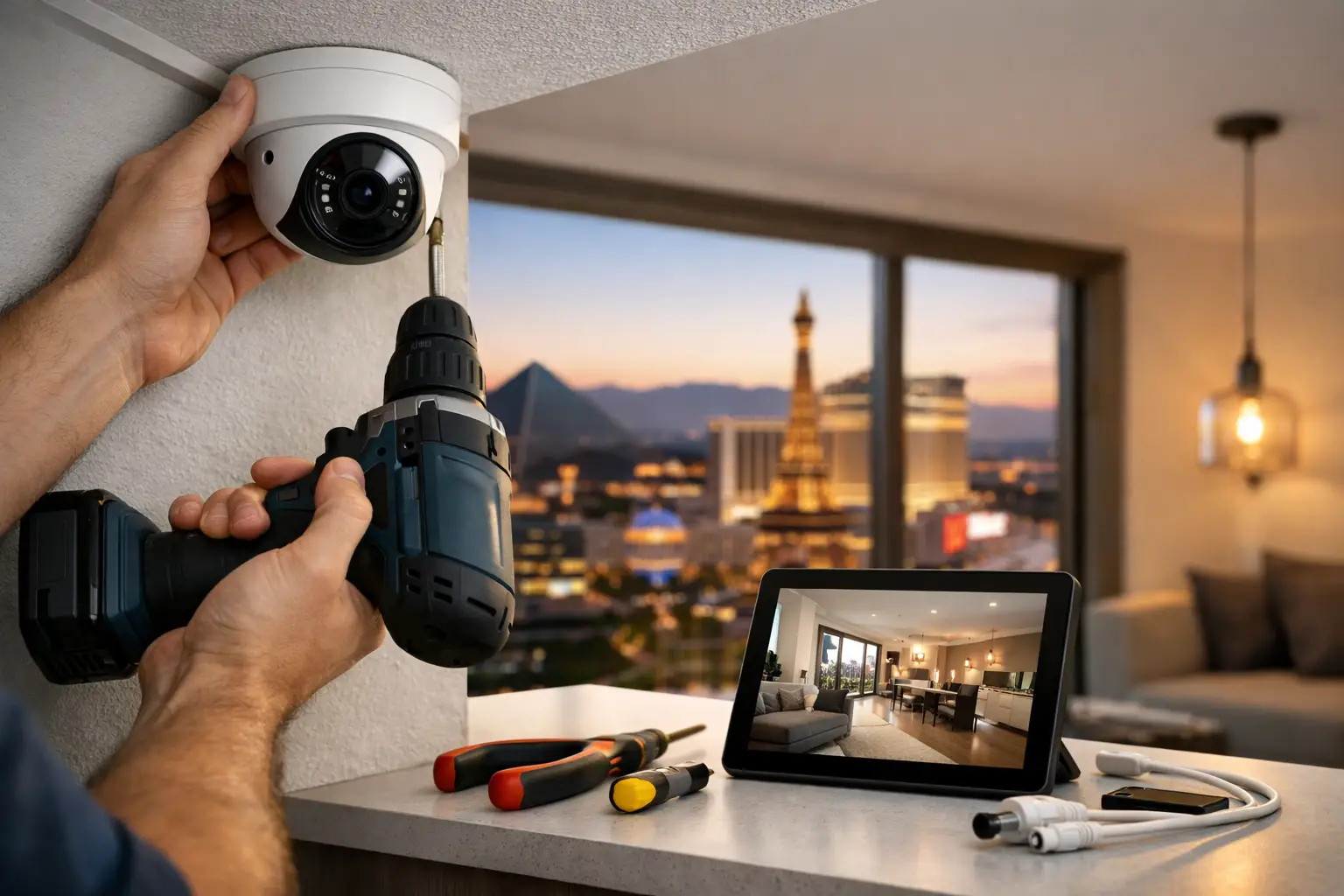
Remote control matters, too. If a neighbor calls about a delivery, a cleaner is arriving, or you see unusual activity on a camera, you should be able to turn on an entry, garage, or exterior light from your phone. When lighting is connected with security cameras, motion sensors, and access control, it can support a faster response to what is happening at the property.
Automation should also make arrival easier. Before you drive in late at night, you can activate the pathway, entry, kitchen, and primary living area. A few properly selected scenes are more useful than a screen full of individual switches.
A schedule is not the same as a security plan
Lighting can discourage the appearance of an abandoned property, but it does not replace door locks, cameras, alarm monitoring, or a local contact who can physically check the home. Think of it as one layer in a broader property protection strategy.
That distinction is especially important with exterior motion lighting. A bright floodlight may help a camera capture clearer footage and draw attention to activity, but poorly placed motion lights can trigger constantly from pets, landscaping, passing cars, or wind. The result is irritation for neighbors and alerts that get ignored. Placement, detection zones, and sensitivity settings need to match the property.
Choose the Right Control Method for the Home
There is no single lighting platform that fits every vacation home. The right choice depends on the home’s electrical layout, Wi-Fi coverage, ownership plans, and how many systems you want connected.
Smart bulbs are often the quickest option for a lamp, guest room, or small number of fixtures. They offer dimming, color options, and scheduling without changing the wall switch. Their limitation is simple: if someone turns off the switch, the bulb goes offline. They are best for limited use cases, not as the foundation of an entire second-home lighting plan.
Smart switches and dimmers are usually a stronger long-term choice. They let the wall control work normally while adding schedules, scenes, and remote access. They also work well with hardwired ceiling fixtures, landscape lighting controls, and common areas where guests or service providers may use the switches.
For a larger home, a centralized smart home platform can bring lighting, shades, climate, cameras, AV, and security into one organized control system. This costs more upfront and requires thoughtful programming, but it prevents the common problem of juggling separate apps for every device. It also makes support much easier when a homeowner wants one team to troubleshoot the network, lighting, and connected equipment.
Reliable Wi-Fi Is Part of the Lighting System
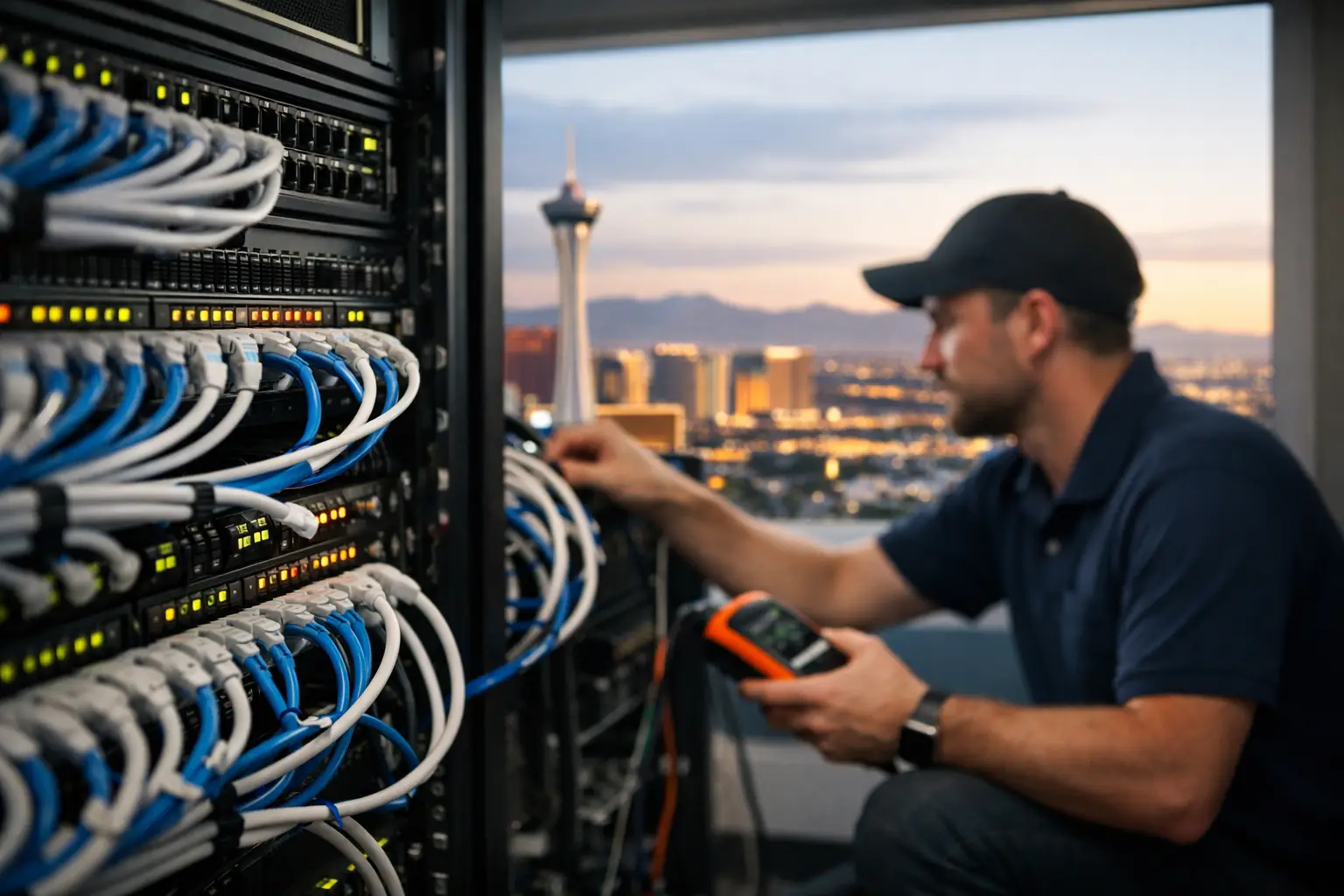
A lighting system is only as dependable as the network behind it. Vacation homes often have a hidden weak point: a router installed years ago in a utility closet, with poor coverage in the garage, patio, detached casita, or exterior camera locations. When the connection drops, remote commands may fail, cameras may go offline, and automation can become unreliable.
Some lighting devices use their own mesh technology instead of relying on Wi-Fi at every switch. That can improve performance, but the system still needs a properly configured hub and internet connection for remote access. Either way, the home needs stable broadband, clean network setup, and equipment that can recover after a power interruption.
For properties that sit empty through summer heat, surge protection and backup power deserve attention as well. A brief outage should not leave the system disconnected until someone makes a service call. Professional installation can identify which networking and control components need battery backup and which lighting schedules can continue locally even if the internet is temporarily unavailable.
Build Lighting Scenes Around Real Moments
The most useful automations are simple enough that everyone understands them. Instead of programming dozens of isolated actions, create scenes based on what actually happens at the house.
An Away scene can turn off nonessential interior lighting, activate selected evening schedules, and make sure exterior entry lights follow sunset. An Arrival scene can light the driveway, front door, hall, and main living space for a set period. A Service Visit scene can provide temporary daytime access to key rooms without giving a cleaner or vendor control over the entire system.
A Storm or Security scene may turn on exterior and interior lights after a verified alarm event, depending on the security setup and local preferences. This needs careful planning. Automatically illuminating every room can reveal the property’s layout from outside and create unnecessary attention. Often, targeted lighting at entries, hallways, and camera-covered areas is the smarter choice.
For short-term rental owners, keep guest controls uncomplicated. Guests should be able to use switches as expected. Automation can maintain exterior lighting and common-area schedules in the background, while clear labels prevent accidental shutdowns of network gear or critical controls.
Common Mistakes That Create More Work
The biggest mistake is buying devices one at a time with no overall plan. A collection of inexpensive bulbs, plugs, and motion sensors can look appealing, then become difficult to support when accounts, apps, passwords, and wireless standards do not match.
Another issue is using timers that never change. Lights that come on at 6:00 p.m. and go off at 10:00 p.m. every day create an obvious pattern, particularly as seasons change. Sunset-based scheduling with reasonable variation is more convincing and more efficient.
Homeowners also underestimate the value of physical controls. A guest, house sitter, or contractor should not need your phone or a tutorial to turn on lights. Quality wall keypads, labeled switches, and sensible scenes make the system easier to live with and easier to maintain.
Finally, do not overlook outdoor fixtures. Las Vegas heat, direct sun, dust, and monsoon conditions can be hard on poorly selected equipment. Exterior devices should be rated for the environment, installed securely, and positioned so they improve visibility without spilling excessive light into neighboring properties.
When Professional Installation Makes Sense
A few smart switches may be a reasonable do-it-yourself project for someone comfortable with electrical work and network setup. A vacation property with multiple zones, landscape lighting, security cameras, gates, detached structures, or unreliable Wi-Fi is different. Those systems benefit from a coordinated design before equipment is purchased.
Las Vegas Tech Pros can evaluate the network, low-voltage infrastructure, lighting controls, cameras, and remote-access needs as one connected project. That approach reduces finger-pointing between separate vendors when a light, app, camera, or Wi-Fi connection stops working. It also gives owners a local team to call when they need an adjustment, expansion, or on-site support.
Start with the areas that matter most: the entry, driveway, exterior doors, main living space, and pathways. Once those zones are dependable, the system can grow with the property. The goal is not to automate every bulb. It is to make an empty home look attended, make late arrivals safer, and make remote ownership feel far less remote.